
Discovering a wasp or hornet nest on your property will make anyone stop in their tracks. These stinging insects are not only intimidating but can also pose serious health risks, especially if someone in your household is allergic. At Madsen Pest Management, we understand how important it is to protect your home and family. That’s why we are here to help you know what to do if you find a wasp or hornet nest near your home.
Step 1: Stay Calm and Keep Your Distance
The first and most important step is not to disturb the nest. Wasps and hornets are highly territorial and can become aggressive if they feel threatened. Sudden movements, loud noises, or attempts to remove the nest yourself may provoke them to swarm and sting.
Most nests are found in trees, under eaves, in sheds, attics, or even inside wall voids. Once you’ve located a nest, keep a safe distance and avoid the area as much as possible until a professional can assess the situation.
Step 2: Identify the Type of Nest
Not all wasps and hornets behave the same way or build the same kind of nest. Knowing what you’re dealing with can help determine the level of threat and how it should be handled.
- Paper Wasps build open, umbrella-shaped nests that hang from eaves or overhangs
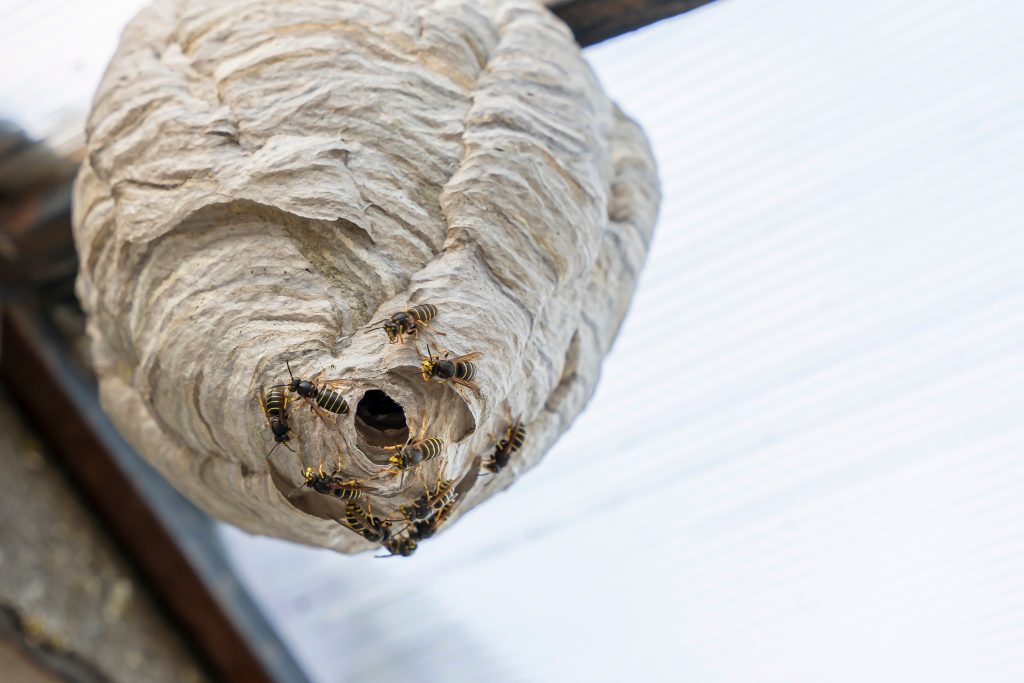
- Hornets construct large, football-shaped nests often high in trees or on the side of buildings.

While it’s not necessary to make a positive ID yourself, noting the nest’s size, location, and general appearance can be helpful when you contact a pest professional.
Step 3: Don’t Attempt DIY Removal
There are countless DIY solutions online promising quick nest removal, but most of them are risky and ineffective. Over-the-counter sprays may only anger the colony, and physical removal without proper gear can result in painful stings.
Even if you manage to kill some of the insects, the queen (who often stays deep in the nest) may survive and rebuild. Or worse, you may inadvertently spread pheromones that attract more wasps to the area.
Step 4: Call a Professional Pest Control Service
The safest and most effective way to handle a wasp or hornet nest is to call a licensed pest management professional. At Madsen Pest Management, our team has the training, tools, and protective equipment to remove nests safely and efficiently.
We’ll assess the type of insect, the size and location of the nest, and choose the best approach whether that means immediate removal or treatment to prevent future infestations. We also offer follow-up services and prevention tips to keep your property protected all season long.
Step 5: Take Steps to Prevent Future Nests
Once the nest is removed, it’s important to take a few proactive steps to make your home less inviting to wasps and hornets in the future:
- Seal entry points like gaps in siding, rooflines, and around vents or windows.
- Cover trash bins and compost piles to avoid attracting scavenging insects.
- Remove food sources, including sugary drinks, pet food, and ripe fruit from trees.
- Inspect regularly during spring and summer, when nests are most likely to appear.
You can also ask our team about preventative treatments that deter nest-building around your home.
When in Doubt, Call Madsen Out
At Madsen Pest Management, we believe your home should be a place of comfort, not one where you’re constantly watching the skies for stingers. If you’ve spotted a wasp or hornet nest on your property, don’t wait. Our fast, friendly, and professional service ensures peace of mind, so you can get back to enjoying your yard safely.
Contact us today to schedule a nest inspection or learn more about our pest control plans!
Related Posts
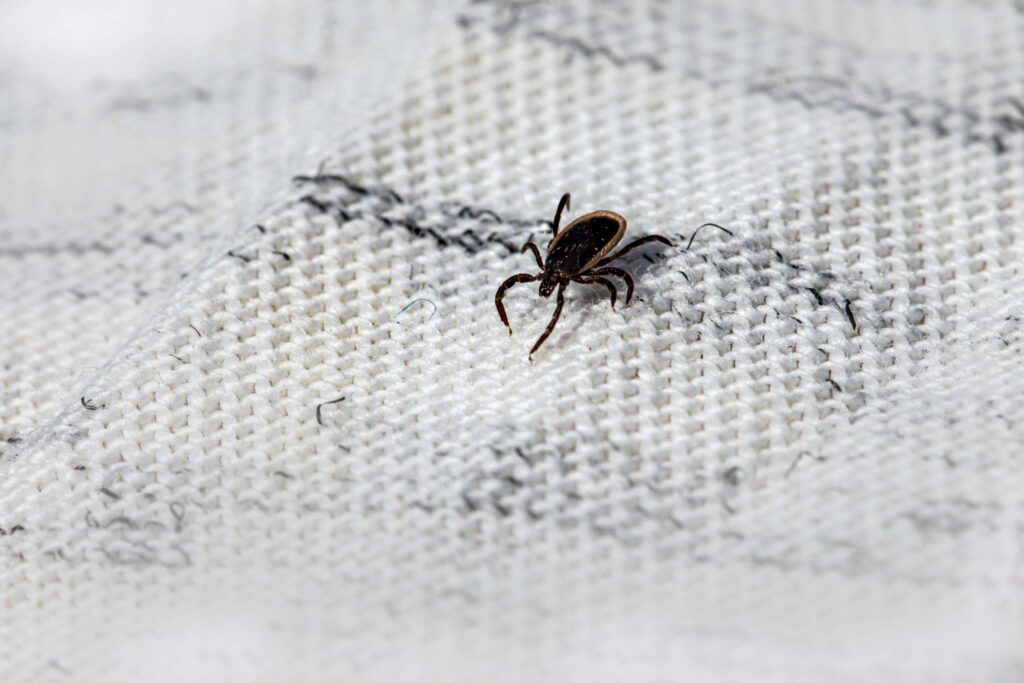
MOSQUITOS, SPIDERS & TICKS… OH MY!: THE PESTS OF SPRING
The sun is shining, the trees are budding, the temperature’s rising; everything is coming back to life after that long and seemingly endless winter. Along with the arrival of spring comes the reemergence of springtime pests. YUCK! Every year we look forward to the melting snow and springtime growth, but frequently forgotten, along with those…
Drain Cleaning to Avoid Unwanted Pests
Did you know Madsen Pest Management offers drain cleaning services for both commercial and residential customers? Drain cleaning is often thought of when you notice your shower or sink draining a bit slower than it used to, but by then, you could already have a pest problem. There are many types of unwanted pests that…
Madsen Pest Management or DIY?
if you have major pest infestation or an issue with destructive pests such as bed bugs, carpenter ants, cockroaches and fleas., it is best to contact MPM.