
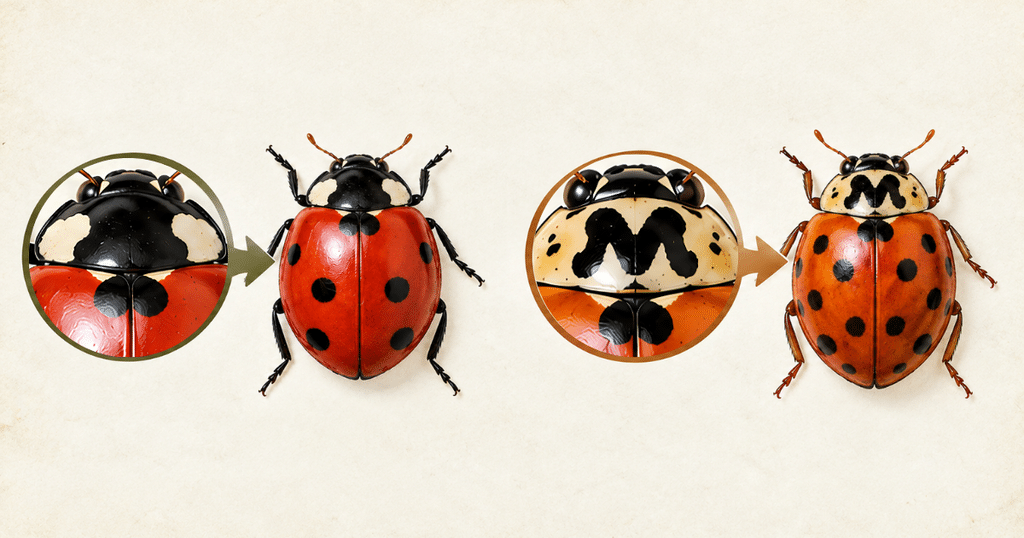
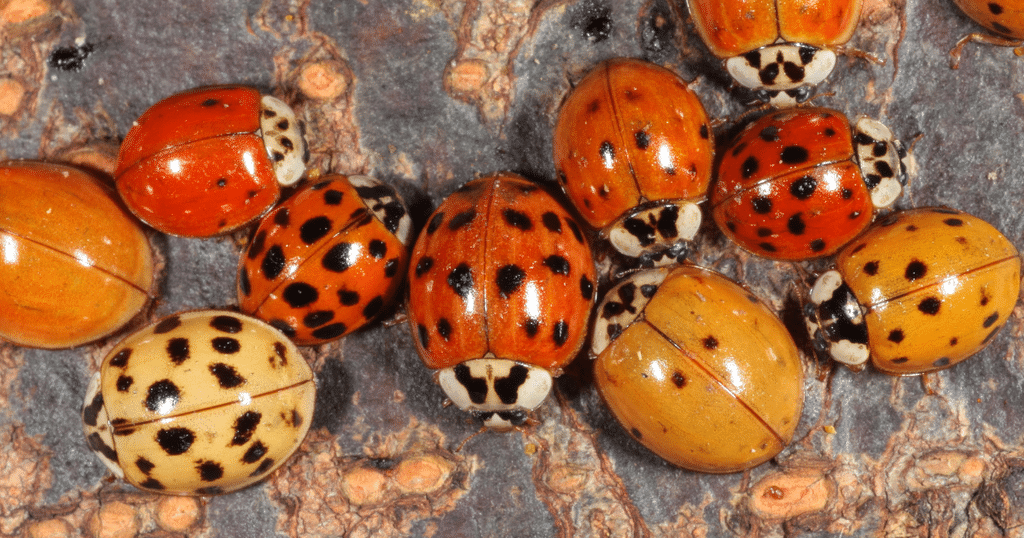
The easiest way to tell a ladybug from an Asian lady beetle is to look at the area directly behind its head. Asian lady beetles typically have a white or cream-colored area behind the head with a black marking that resembles an “M” or “W.”
Their coloring can range from yellow and orange to deep red, and they may have many black spots, only a few spots, or no spots at all. Asian lady beetles also tend to be slightly larger and more oval-shaped than many other lady beetle species.

How to Tell an Asian Lady Beetle From a Ladybug
Ladybugs and Asian lady beetles look similar and both belong to the lady beetle family, but there are some important differences between them. Ladybugs vary by species, but many of the familiar species found in Wisconsin and Minnesota are red or reddish-orange with black spots and do not have the distinctive black “M” marking associated with Asian lady beetles.
Quick Comparison: Ladybug vs. Asian Lady Beetle
| Ladybugs Markings | Asian Lady Beetles Markings | |
|---|---|---|
| Color | Varies by species, often red | Yellow, orange or red |
| Spots | Depends on species | 0–19 spots |
| Marking behind head | Varies by species | Often a black “M” or “W” shape |
| Typical behavior | Commonly found outdoors around plants | Often gather on buildings in large numbers in fall |
| Enter homes? | Some species may overwinter in protected areas | Frequently enter homes and buildings to overwinter |
| Can they bite? | Generally not a household concern | Yes, these beetles bite |
| Can they stain surfaces? | Less commonly a household issue | Yes – their defensive secretion can stain surfaces |
What Are Asian Lady Beetles?
The multicolored Asian lady beetle (Harmonia axyridis) is a species of lady beetle native to Asia.
Like other lady beetles, Asian lady beetles are predators of aphids and other soft-bodied insects. That makes them beneficial in agricultural fields, gardens and landscapes during much of the year.
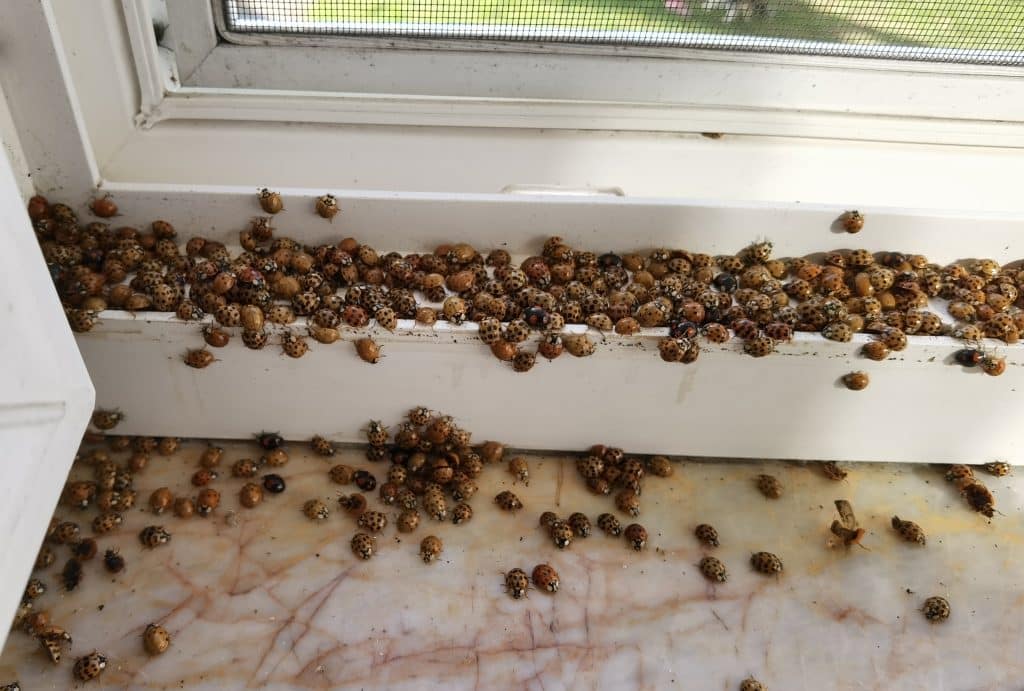
The problem begins when temperatures start dropping. Asian beetles look for protected places to spend the winter. In Wisconsin and Minnesota, that often means homes, garages, cabins, barns and other buildings. During warm, sunny fall days, you may suddenly notice dozens – or even hundreds – gathering on exterior walls, windows and doors.
Why Are Asian Lady Beetles All Over My House in the Fall?
If Asian lady beetles seem to appear out of nowhere during September and October, they’re looking for a place to overwinter.
As temperatures cool across Wisconsin and Minnesota, Asian lady beetles begin moving toward protected areas. They are particularly attracted to sunny, warm sides of buildings and can gather in large numbers on exterior walls.
From there, they look for small openings that lead inside. Asian lady beetles can enter through gaps around:
- Windows and doors
- Siding and trim
- Rooflines and fascia
- Utility penetrations
- Vents
- Soffits
- Cracks and gaps in the exterior of the home
They can fit through openings as small as approximately 1/8 inch, which means even a home that appears well-sealed may provide plenty of potential entry points.
Once inside, Asian lady beetles may settle into wall voids, attics and other protected spaces for the winter.
Are Asian Lady Beetles Harmful?
Asian lady beetles are primarily considered a nuisance pest when they enter homes. They do not eat wood, damage the structure of your home, infest food, or reproduce indoors. However, large numbers of beetles inside a house can quickly become frustrating.
When disturbed or crushed, Asian lady beetles can release a yellowish defensive liquid that has a noticeable odor and may stain walls, curtains, furniture, and other light-colored surfaces.
Asian lady beetles can also bite. Their bite typically feels like a small pinch and is not considered dangerous. They do not sting and are not known to transmit disease.
Why Are Asian Lady Beetles So Common in Wisconsin and Minnesota?
Asian lady beetles are well established throughout the Upper Midwest. They feed heavily on aphids and can be especially common around agricultural areas. During the growing season, this makes them beneficial predators.
In the fall, however, those beetles begin leaving their summer habitats and searching for protected overwintering locations. The combination of abundant agricultural and wooded areas, cold winters and plenty of homes and buildings offering protected cracks and crevices makes Asian lady beetles a familiar fall sight throughout Wisconsin and Minnesota.
In Minnesota, Asian lady beetle movement toward buildings commonly occurs from late September through late October, particularly when temperatures are above approximately 65°F before freezing weather arrives.
How Do You Keep Asian Lady Beetles Out of Your House?
When it comes to Asian lady beetle control, prevention is one of the most important steps. Once hundreds of beetles have already found their way into wall voids and other protected areas, controlling them becomes much more difficult.
Before fall activity peaks, inspect the exterior of your home for potential entry points. Pay close attention to gaps around windows, doors, siding, utility lines, vents, fascia and areas where different building materials meet.
Sealing those openings can help reduce the number of Asian lady beetles – along with other overwintering pests – that make their way inside.
How to remove Asian Lady Beetles
Avoid crushing Asian lady beetles whenever possible. When disturbed or crushed, they can release their yellow defensive secretion, which may leave stains and an unpleasant odor.
For small numbers of beetles already inside the living area, a vacuum can be an effective way to remove them. But if you’re consistently seeing large numbers of Asian lady beetles or they return every year, the bigger issue may be how they’re getting into the structure in the first place. Identifying and addressing those entry points can help reduce future pest activity.
Need Help With Asian Lady Beetles in Wisconsin or Minnesota?
If Asian lady beetles are taking over the outside of your home – or finding their way inside – Madsen Pest Management can help. Our team provides professional pest management services throughout communities across Wisconsin and Minnesota. We can help identify the pest you’re dealing with, look for conditions contributing to the problem and recommend the right next steps for your property.
Ready to stop the beetle invasion? Contact Madsen Pest Management today for an inspection and quote.
Frequently Asked Questions
What is the main difference between a ladybug and an Asian lady beetle?
The “M” or “W” marking behind the head. Asian lady beetles have it, and native ladybugs do not. Asian lady beetles are also slightly larger and more oval, and they’re the species that invades homes.
Is it “Asian lady beetle” or just “Asian beetle”?
The correct name is Asian lady beetle, although many people simply call them Asian beetles. Both terms are commonly used when talking about these fall pests.
Do Asian lady beetles bite?
Yes, they do, but bites are usually mild and rarely break the skin.
Why do Asian lady beetles come into my house in the fall?
They’re looking for a warm, protected place to spend the winter, and the gaps around your home’s exterior give them easy access.
Do Asian lady beetles reproduce indoors?
No. They don’t breed inside your home, but they can stay hidden in walls and attics until warm weather wakes them, which makes it seem like they’re multiplying.
Why do Asian lady beetles smell and stain?
They release a yellow, foul-smelling fluid when disturbed or crushed.
Are ladybugs and Asian lady beetles the same thing?
Not exactly. Both are lady beetles, but the Asian lady beetle is a different species, introduced from Asia, with different behavior.
When should I treat for Asian lady beetles?
Early fall, before they gather on and enter your home.
Related Posts
Boxelder Bugs, Asian Lady Beetles, and Stink Bugs: Stopping Wisconsin’s Fall Overwintering Pests
As Wisconsin temperatures begin to drop in the fall, you may notice some unwanted visitors gathering around your home. Boxelder bugs cover sunny siding. Asian lady beetles cluster around windows and doors. Stink bugs seem to appear out of nowhere. They aren’t necessarily looking for food. They’re looking for somewhere warm and protected to spend…
How to Perform Your Own Exterior Rodent Inspection: A Homeowner’s Checklist
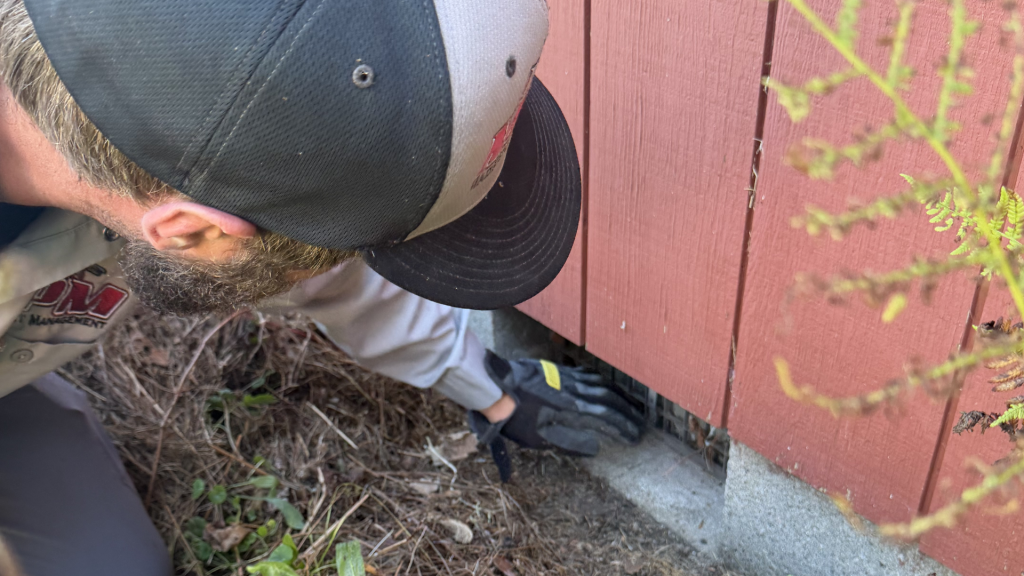
Rodents don’t need much of an opening – mice can squeeze through a gap the size of a dime, and rats through a gap the size of a quarter. Before winter pushes rodents indoors looking for warmth, a 20-minute walk around your home’s exterior can catch the entry points and warning signs before they turn…
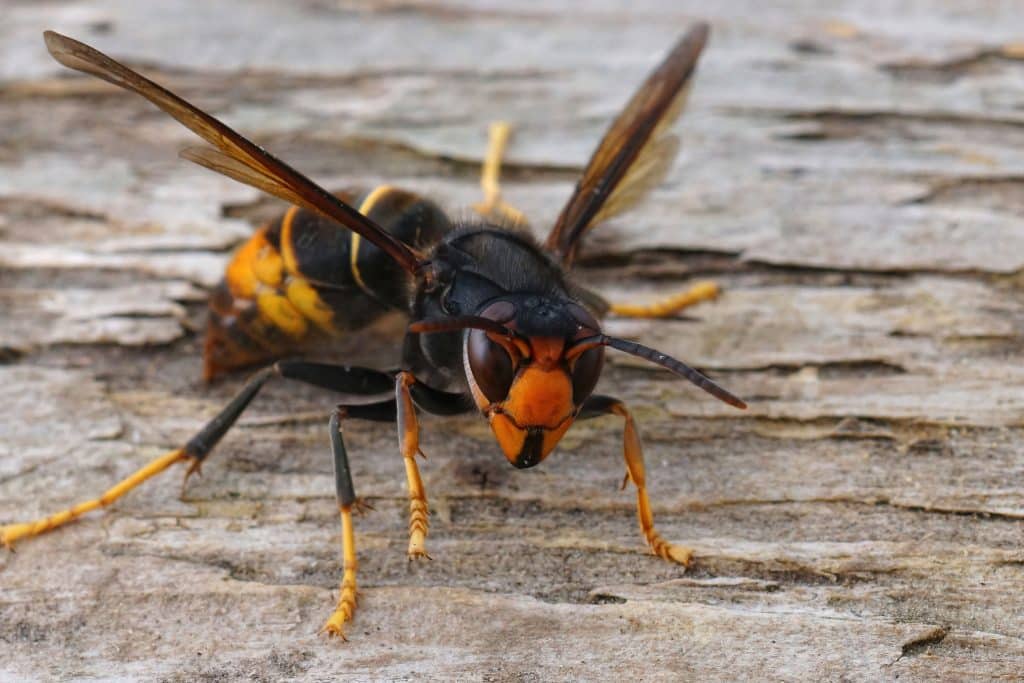
Why Are Hornets So Aggressive? Understanding Hornet Behavior
Hornets have a reputation for being aggressive, and for good reason. While they aren’t necessarily looking for a fight, hornets can become highly defensive when they feel their nest or colony is threatened. Understanding why hornets are aggressive can help you avoid getting stung and know when it’s time to call a pest control professional.…