
It’s never fun to come across a spider in your home, whether it’s skittering across the bathroom floor or dangling from a basement beam. But while spiders might be unwelcome guests, most are harmless and even beneficial in small numbers. Still, if you’re seeing more spiders than usual or want to keep them out entirely, knowing which types are common in homes and how to deal with them can make a big difference.
At Madsen Pest, we believe knowledge is power. So here’s your quick guide to the most common household spiders and what you can do about them.

These are the spiders most often seen hanging out in corners, basements, garages, and sheds. They’re small, brownish, and spin the classic cobwebs you might find collecting dust.
- Threat level: Harmless
- Behavior: Builds webs in quiet, undisturbed places
- Control tips: Regular dusting and vacuuming in corners and under furniture helps prevent web-building. Keep your home clutter-free, especially in storage areas where spiders love to hide.
2. Wolf Spider (Family: Lycosidae)

Wolf spiders look intimidating due to their large size and fast movement, but they don’t spin webs and are not aggressive toward humans. You might see them running across the floor or hiding in basements or garages.
- Threat level: Harmless but can bite if provoked
- Behavior: Hunts prey on foot; often enters homes searching for insects or warmth
- Control tips: Seal cracks and gaps in windows and foundations. Reduce indoor insects to eliminate their food source.
3. Cellar Spider (Pholcus phalangioides)
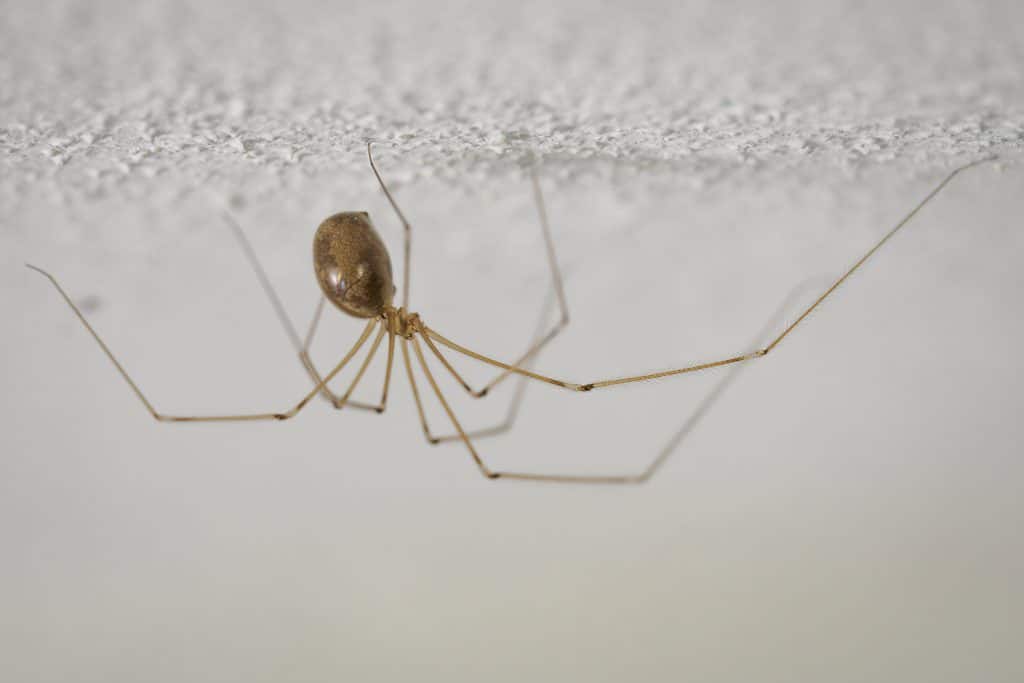
Also known as “daddy longlegs,” these long-legged spiders hang upside-down in webs, often in basements, crawlspaces, or garages. They’re not to be confused with the harvestman, which is a different type of arachnid entirely.
- Threat level: Harmless
- Behavior: Feeds on other insects, including other spiders
Control tips: Clear out webs, improve ventilation in damp areas, and keep humidity levels low with a dehumidifier.
4. Brown Recluse (Loxosceles reclusa)

This is one of the few potentially dangerous spiders found in U.S. homes. Identified by its violin-shaped marking, the brown recluse is shy and prefers dark, quiet areas like attics, closets, and storage boxes.
- Threat level: Potentially harmful (bites can cause skin damage)
- Behavior: Avoids humans but may bite if trapped against the skin
- Control tips: Shake out clothing and shoes before wearing if stored in undisturbed areas. Avoid clutter, wear gloves when going through storage, and call a professional if you suspect an infestation.
5. Jumping Spider (Family: Salticidae)

These curious little spiders are small, often black or brown with iridescent markings, and—as the name implies—are known for their jumping ability. You’ll usually find them near windows or sunny spots as they hunt during the day.
- Threat level: Harmless
- Behavior: Active hunters, no webs
- Control tips: Use weather stripping and window screens to keep them outside. They often wander in by accident.
How to Prevent Spiders in the First Place
Here are a few proactive steps you can take to keep your home spider-free:
- Seal Entry Points: Check and seal cracks around windows, doors, and foundations.
- Reduce Outdoor Attraction: Keep bushes, firewood, and mulch away from your home’s perimeter. Spiders often enter from nearby hiding places.
- Turn Off Outdoor Lights: Outdoor lighting attracts insects, which in turn attract spiders.
- Declutter: The less clutter, the fewer hiding spots.
- Control Other Insects: Spiders follow their food. Reducing your overall insect population reduces spider activity.
When to Call Madsen Pest
A stray spider or two doesn’t usually signal a problem, but if you’re finding spiders regularly, seeing egg sacs, or worried about a potentially venomous species, it’s time to call the professionals.
At Madsen Pest, we offer safe, effective spider control solutions designed for long-term peace of mind. Our team will inspect your home, identify the species, and create a customized plan to remove existing spiders and prevent future intrusions.
Don’t share your home with eight-legged squatters. Get in touch with Madsen Pest today for a free consultation.
Want to schedule a service or learn more about our pest control programs? Visitwww.madsenpest.com or give us a call!
Related Posts
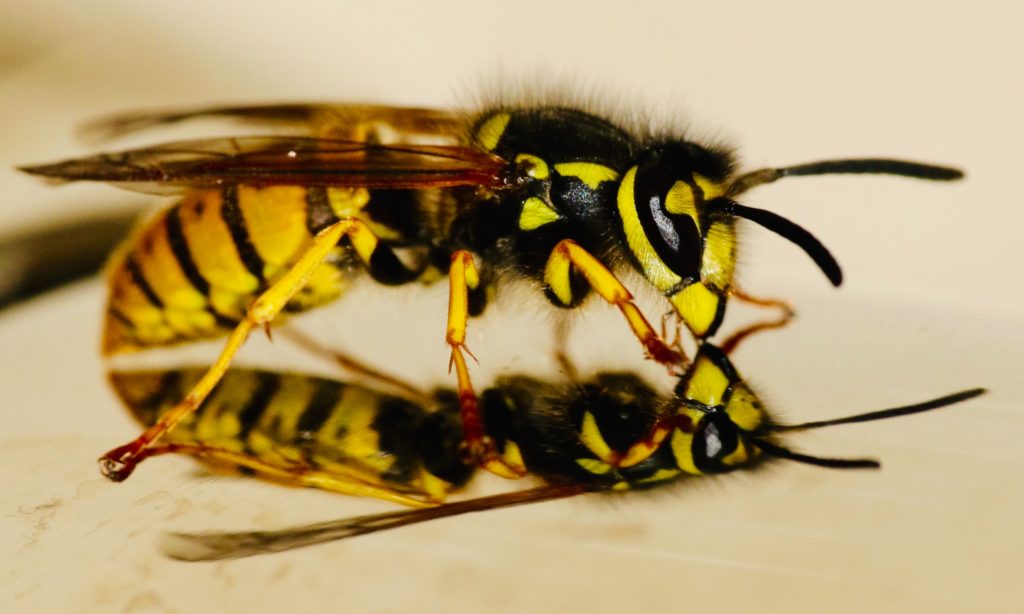
BEES, WASPS AND HORNETS: THE STINGING INSECTS OF SUMMER
Summer months in the Midwest are picturesque. The weather’s hot, the sun is shining, the plants are lush, the flowers are blooming; everything is bright and green again. No longer do we dream of the sun and heat, it’s here! Just picture all of your favorite summertime activities, like relaxing outside on the patio sipping…
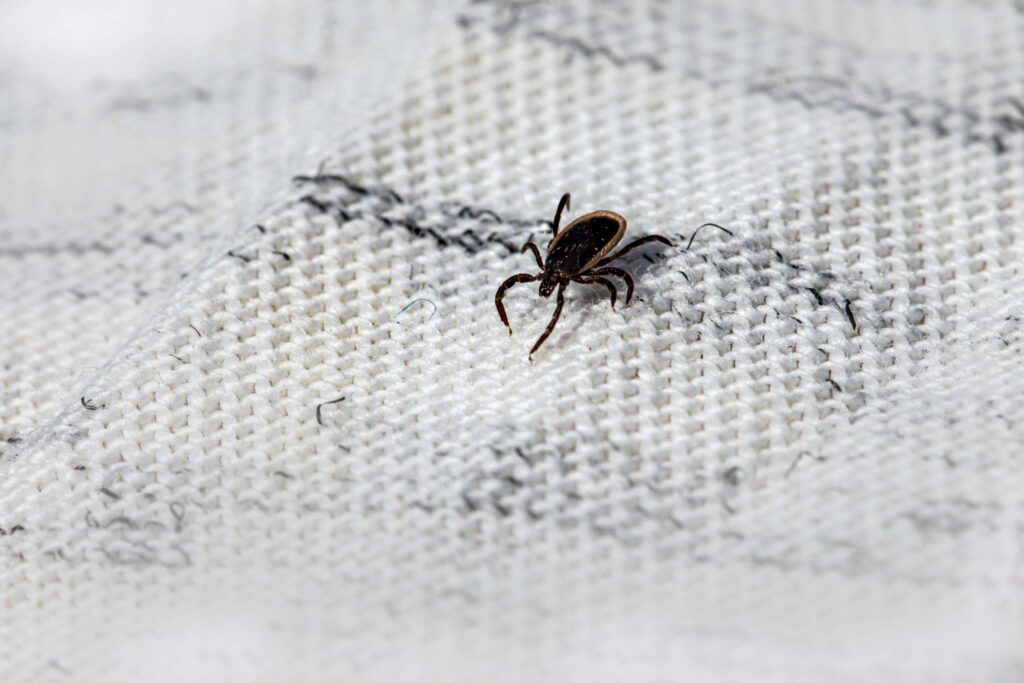
MOSQUITOS, SPIDERS & TICKS… OH MY!: THE PESTS OF SPRING
The sun is shining, the trees are budding, the temperature’s rising; everything is coming back to life after that long and seemingly endless winter. Along with the arrival of spring comes the reemergence of springtime pests. YUCK! Every year we look forward to the melting snow and springtime growth, but frequently forgotten, along with those…
Drain Cleaning to Avoid Unwanted Pests
Did you know Madsen Pest Management offers drain cleaning services for both commercial and residential customers? Drain cleaning is often thought of when you notice your shower or sink draining a bit slower than it used to, but by then, you could already have a pest problem. There are many types of unwanted pests that…