
You’ve lovingly tended to your garden, carefully selecting the perfect plants and diligently watering and nurturing them. However, one day, as you admire your blooming flowers and flourishing vegetables, you notice a line of tiny intruders passing through your garden bed.
You’ve got ants in your plants!
Do these industrious little creatures pose a threat to your beloved plants, or are they just harmless spectators in the garden symphony?

Are Ants in a Garden Bed a Good Thing?
While ants may seem like tiny troublemakers they are actually quite beneficial to your garden beds.
Ants play a vital role in nature. These tiny creatures are nature’s gardeners, diligently working to maintain the delicate balance of ecosystems.
Ants aerate the soil as they tunnel, enhancing drainage and allowing oxygen to reach plant roots. Additionally, ants are expert decomposers, breaking down organic matter and returning nutrients to the soil.
In a way, ants are like the unsung heroes of your garden, quietly toiling away to create a healthy and thriving environment.
Ants as Garden Pests
However, when it comes to ants in your plants, an excessive population can transform your thriving vegetable garden into a pest patch. Despite their crucial ecological role, ants can sometimes become unwelcome guests in our gardens. Certain ant species can cause significant damage to plants and structures, such as:
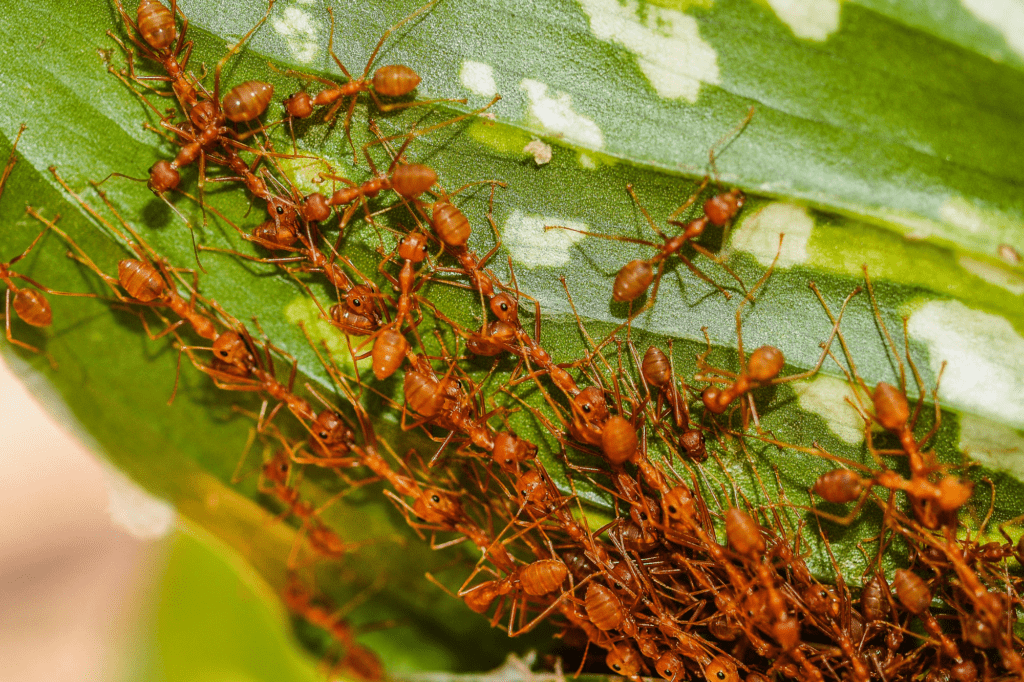
Fire ants:Their painful bites and aggressive nature can turn your serene gardening experience into a painful encounter.
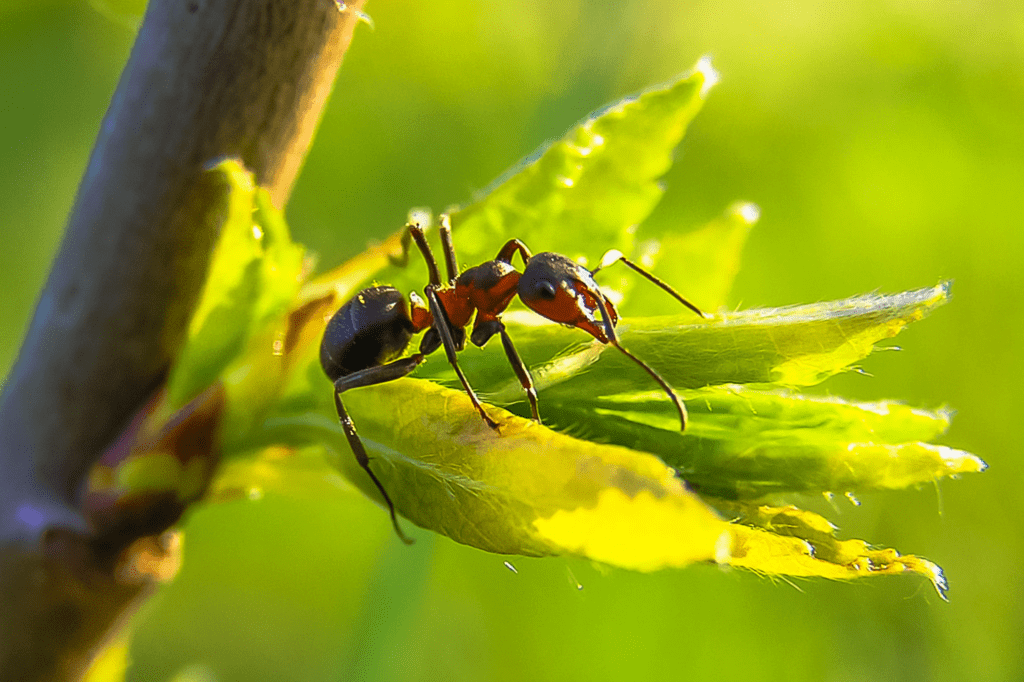
Carpenter ants: These ants burrow into wood and can weaken the structural integrity of fences, garden sheds, or raised garden beds.
These instances highlight the need to understand when ants cross the line from being helpful to becoming garden pests.
Ant Prevention and Management
Natural Ways To Get Rid of Ants in Your Plants
Many gardeners prefer natural and eco-friendly methods when it comes to keeping ants at bay. Fortunately, there are several ways to get rid of ants without damaging your environment.
Consider planting companion plants that repel ants, such as:
- Mint
- Lavender
- Marigold
These aromatic herbs and flowers can act as natural ant repellents, creating a fragrant barrier that ants find unappealing.
You can also use homemade remedies like vinegar or citrus peels to create ant-deterrent sprays.
Practical Steps for Ant Control
If preventive measures aren’t enough to control the ant population in your garden, there are practical steps you can take to manage the situation.
- Identify ant trails: Observe and locate ant trails to understand their entry points.
- Disrupt the trails: Wipe away ant trails with soapy water to confuse and disrupt their communication.
- Remove food sources: Keep your garden clean and free of food debris that may attract ants.
- Create barriers: Use natural deterrents like cinnamon or coffee grounds to create barriers ants won’t cross.
- Maintain garden hygiene: Regularly inspect your garden, seal entry points, and keep the area tidy to discourage ants from returning.
Calling Pest Control Companies
If you’re dealing with a persistent ant infestation that seems beyond your control, or if you suspect the presence of destructive ant species like carpenter ants, it’s time to seek professional help.
Pest control companies have the knowledge, experience, and specialized tools to effectively eliminate ants and protect your garden from further damage.
Protect Your Garden With Madsen Pest Management
Ants in your plants can be a double-edged sword, bringing benefits or becoming a nuisance, depending on the species and their impact on your garden beds. Understanding the role of ants in ecosystems and their potential as garden pests empowers homeowners and gardeners to take proactive steps for ant prevention and management.
Let’s say goodbye to those uninvited guests and embrace a garden teeming with life — minus the ants. For reliable and eco-friendly pest management solutions,trust the experts at Madsen Pest Management. Your garden deserves the best care possible!
Related Posts

What to Do If You See a Cockroach in Your Home
Spotting a cockroach in your home can be unsettling. Whether it scurries across the floor or hides behind an appliance, it’s not something anyone wants to see. While one roach doesn’t always signal a full-blown infestation, it’s often a sign that others may be nearby. Acting quickly can make all the difference in preventing a…

The Great Rodent Escape: How Mice Are Living the Dream (In Your Walls)
If you think your home is your sanctuary, you’re not alone. Unfortunately, you may be sharing it with some very uninvited, and surprisingly crafty, roommates. Mice are masters of stealth and survival, and when the temperatures drop or food becomes scarce outdoors, they start looking for luxury accommodations. Cue: your walls, attic, basement, and pantry.…

The Most Common Spiders in Homes and How to Deal with Them
It’s never fun to come across a spider in your home, whether it’s skittering across the bathroom floor or dangling from a basement beam. But while spiders might be unwelcome guests, most are harmless and even beneficial in small numbers. Still, if you’re seeing more spiders than usual or want to keep them out entirely,…