
If you see one mouse, chances are there are more.
Yes, if you see one mouse in your home or business, chances are there are more. Here’s why.
Mice are homebodies. The average house mouse typically stays within 10 to 30 feet of its nest, and that distance can be even shorter when food and water are readily available. So, if you’ve spotted a mouse, there’s a good chance it’s living somewhere nearby.
Mice are also social animals. They often live with their families and in groups. They also reproduce incredibly quickly. A female house mouse can have 5 to 10 litters per year, with an average of 5 to 6 babies per litter. Even more concerning? Those babies can begin reproducing when they’re just six weeks old. With multiple mice living and breeding in the same area, a small mouse problem can quickly turn into a much larger infestation.
Mice are nocturnal, quick, and naturally cautious around people. You’re often more likely to notice signs of their activity, such as droppings, scratching noises in the walls, gnaw marks, or chewed food packaging, than you are to actually see a mouse.
In our professional experience, finding just one mouse is rarely the whole story. If you’ve spotted a mouse in your home or business, it’s time to take a closer look, and quickly. That means finding out how they’re getting inside and addressing any mice that may already be living there.
The sooner you address the mouse problem, the better your chances of keeping a small rodent issue from becoming a much, much bigger one. Because when it comes to mice, the problem can multiply. Literally.
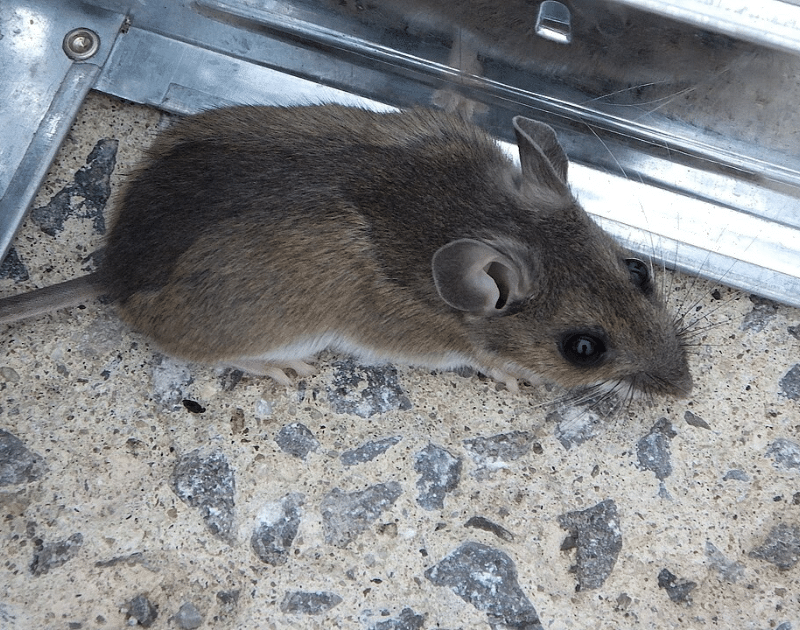
What Should You Do If You See a Mouse in Your House?
If you’ve spotted a mouse or discovered signs of rodent activity, taking action early can help prevent a small problem from becoming more difficult to manage.
Inspect Your Home for Potential Entry Points
Start by examining the exterior of your home for gaps, cracks, and openings that rodents may be using to get inside. Pay particular attention to areas around foundations, doors, utility penetrations, siding, vents, and other places where building materials meet.
Not sure where to start? Check out our Printable Rodent Entry Point Checklist to learn six common exterior areas to inspect for potential rodent entry points.
Remove Accessible Food Sources
Mice are opportunistic feeders and can survive on surprisingly small amounts of food. Help reduce food sources by storing pantry items and pet food in sealed containers, cleaning up crumbs and spills, and keeping garbage secured.
While removing food sources won’t necessarily eliminate mice already living inside, it can make your home less attractive to rodents.
Address Entry Points and Existing Rodent Activity
Sealing exterior openings is an important part of long-term rodent prevention, but it’s important to consider whether mice are already living inside before closing potential entry points. Improperly sealing openings without addressing existing rodent activity can trap mice inside the structure.
Effective rodent control often involves a combination of inspection, trapping or removal, exclusion, and ongoing prevention.
When Should You Call a Professional for Mouse Control?
If you’re repeatedly seeing mice, discovering fresh droppings, hearing activity inside walls, or finding signs of nesting, it may be time to contact a professional pest control company. A professional rodent inspection can help identify signs of activity, potential nesting locations, and the openings mice may be using to access your property.
At Madsen Pest Management, our team can help identify rodent activity, address existing problems, and implement exclusion and prevention strategies to help reduce future activity.
Frequently Asked Questions About Mice Control
Still have questions about mice in your home or business? You’re not alone! From how quickly mice multiply to whether they’ll eventually leave on their own, we’re answering some of the most common questions homeowners have about mouse activity and infestations.
The most effective rodent control involves an Integrated Pest Management (IPM) approach that combines targeted treatments, exclusion, and prevention. At Madsen Pest Management, we use IPM strategies to address existing rodent activity, identify potential entry points, and reduce conditions that attract mice and rats. This comprehensive approach helps provide more effective, long-term rodent management.
Long-term rodent control requires addressing both the rodents currently on your property and the conditions allowing them to enter and survive. Sealing entry points, removing accessible food sources, reducing nesting opportunities, and implementing appropriate control methods can help prevent recurring infestations. While no method can guarantee rodents will never return, ongoing prevention significantly reduces the risk.
Mice generally won’t leave a home simply because the weather warms up. If they have access to food, water, and protected nesting areas, they may remain inside and continue reproducing. Addressing existing mice and potential entry points is important for long-term control.
A mouse sighting doesn’t automatically make a home unsafe to sleep in, but rodent activity should be addressed promptly. Mice can contaminate surfaces with urine and droppings, and some rodents can carry diseases. Avoid direct contact with rodents and their waste, follow safe cleanup procedures, and seek professional assistance when needed.
A lack of sightings alone doesn’t confirm that every mouse has been removed. Monitoring for fresh droppings, new gnaw marks, trapping activity, and other signs can help determine whether rodents are still present. Continued inspection and properly addressing entry points can help reduce the likelihood of recurring problems.
Have a rodent control question we didn’t cover? Give Madsen Pest Management a call at 715-791-4777. Our team is happy to answer your rodent questions, help you understand what might be happening around your property, and recommend the next steps.